

The Galapagos Islands: Where Wildlife Has Never Feared Humans

The Galapagos Islands: Where Wildlife Has Never Feared Humans

Travel Feature — Presented By

🐢 G Adventures — The Galapagos Islands

Read the full feature on the CMTA Travel Services blog

There are very few places left on earth where wildlife has almost no fear of humans. The Galapagos Islands is one of them. Here, sea lions loll on park benches, blue-footed boobies display their remarkable feet without the slightest concern about onlookers, and giant tortoises — some over a century old — move through the landscape with timeless, unhurried dignity. It’s a destination unlike any other on the planet, and G Adventures is one of the best ways to experience it properly.
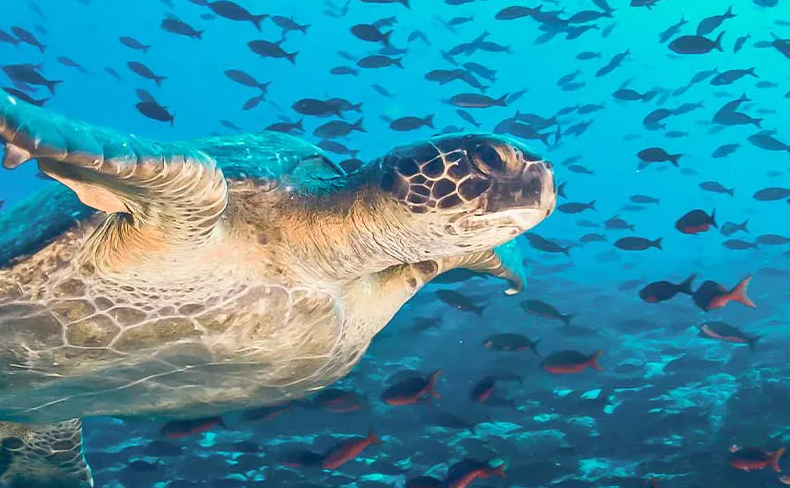
Galapagos Islands - giant tortoise

A Living Laboratory

97% of the Galapagos Islands is protected as a national park, with the surrounding waters designated a UNESCO Biosphere Reserve. Visitor numbers are strictly controlled — which means no crowds, and no compromise to the extraordinary natural environment. The islands were formed by volcanic activity over thousands of years and remain one of the most volcanically active areas on earth. Standing here, watching wildlife that evolved in near-total isolation, you understand exactly what inspired Charles Darwin during his five weeks of observation in 1835.

The Wildlife is Extraordinary

The Blue-Footed Booby is the islands’ most iconic resident — but it’s joined by two other booby species, Galapagos penguins (the only penguin species found north of the Equator), marine iguanas, flightless cormorants, and the Galapagos Giant Tortoise with its lifespan of over a century. At night, with zero light pollution right on the Equator, the stars from both hemispheres are laid out above you simultaneously — a sky unlike anything most people have ever seen.

How G Adventures Gets You There

G Adventures’ small group approach means you experience the Galapagos with local expert guides, on carefully designed itineraries that maximize wildlife encounters while respecting the park’s strict protocols. The minimum safe distance of two metres from wildlife is enforced — because the point here is nature on its own terms, not performance for tourists.

Year-Round Destination

One of the Galapagos’ great practical advantages is its year-round temperate climate — the hot season runs December to May, the drier season June to November. With 12 hours of daylight every day and no daylight saving time to adjust for, it’s a destination that works whenever the timing is right for you.

The Galapagos belongs on your bucket list — let’s get you there

Renée Charbonneau is a Certified Travel Agent and proud member of CMTA Travel Services in Grande Prairie, AB. She specializes in G Adventures small group tours including the Galapagos and South America.


📩 Contact Renée at CMTA Travel Services

24 Hours in Lima: The Foodie Capital of South America

24 Hours in Lima: The Foodie Capital of South America

Travel Tips — Presented By

🇵🇪 HX Expeditions — Lima in 24 Hours

Read the full feature on the CMTA Travel Services blog

Lima is one of South America’s great underrated cities — and increasingly, travellers are choosing to linger longer rather than rush through on the way to Machu Picchu. The world’s second-largest desert city is home to a culinary scene that consistently ranks among the planet’s best, coastal cliffs with spectacular Pacific views, and neighbourhoods that swing from colonial grandeur to bohemian cool. Here’s how to make the most of 24 hours.

Morning: Coffee and the Coast

Start the day with Peruvian coffee — some of the best in South America, known for its vanilla-toned sweetness and nutty aroma. The brave can try emoliente, a traditional herb-infused hot drink with maca. Then head to Óvalo de Miraflores and walk south along the Malecón promenade — a cliffside path above the Pacific with sweeping ocean views. Follow it to the artsy Barranco district, where the legendary Bridge of Sighs is said to grant wishes to anyone who holds their breath while crossing.

Afternoon: Food, History, and the Plaza Mayor

Lima’s food reputation is global — the city is home to several of the world’s top 50 restaurants. But the best foodie experiences aren’t always the fanciest: try fresh ceviche at a casual spot on Calle Berlin, or sample choclo con queso (Andean corn with cheese) and papa rellena (stuffed potato with aji sauce) from street vendors. For culture, the Plaza Mayor — a UNESCO World Heritage site surrounded by the Presidential Palace and Cathedral of Lima — gives you the city’s colonial history in one stunning square.

Evening: Pisco Sours and Peñas

No visit to Lima is complete without Peru’s national cocktail, the Pisco Sour. The Museo del Pisco is the obvious starting point, but any bar worth visiting makes an excellent version. If you want to go deeper into local culture, look for a peña in Barranco — hidden-away basement restaurants where couples perform traditional dances to live music, unchanged by tourism and utterly authentic.

Routing Through Lima — How It Works from Alberta

Lima is typically a gateway city for Machu Picchu, the Sacred Valley, and G Adventures tours throughout Peru and South America. Spending a proper day or two in Lima before heading south is one of the smartest decisions you can make — and it’s easy to build into any South America itinerary.

Ready to plan your South America trip?

Renée Charbonneau is a Certified Travel Agent and proud member of CMTA Travel Services in Grande Prairie, AB.

📩 Contact Renée at CMTA Travel Services